Studies: Obesity rates level off in most states; poor, obese, smokers die younger
September 21, 2015 |02:08 PM
U.S. adult obesity rates remained stable in most states this past year, but increased in Kansas, Minnesota, New Mexico, Ohio and Utah, according to “The State of Obesity: Better Policies for a Healthier America,” a report released today by the Trust for America’s Health and the Robert Wood Johnson Foundation.
Nationally, more than 30 percent of adults, nearly 17 percent of 2- to 19-year-olds and more than 8 percent of children ages 2 to 5 are obese, the study said, putting some 78 million Americans at an increased risk for a range of health problems, including heart disease, diabetes and cancer.
Arkansas had the highest adult obesity rate at 35.9 percent, while Colorado had the lowest at 21.3 percent.
The 12th annual report found that rates of obesity now exceed 35 percent in three states (Arkansas, West Virginia and Mississippi), are at or above 30 percent in 22 states, and are not below 21 percent in any.
In 1980, no state had a rate above 15 percent, and in 1991, no state had a rate above 20 percent.
 Jeff Levi
The two organizations view the leveling off nationwide as a sign of progress, Jeff Levi, executive director of the Trust, told reporters in a call, but more needs to be done to encourage healthier eating and more physical exercise, he said.
Even though the adult obesity rate is much higher than the childhood obesity rate, the Robert Wood Johnson Foundation will continue to fight childhood obesity, Abbey Cofsky, a senior program officer, said.
 Abbey Cofsky
Cofsky said the foundation has committed more than $1 billion to:
First Lady Michelle Obama has made improving school meals a key element in her Let’s Move! campaign against childhood obesity, but last week at the White House she honored local officials who have joined her campaign to make physical activity as well as healthier eating easier.
The first lady noted that one in four Americans now live in communities that have joined her campaign.
According to the joint news release, other key findings from The State of Obesity report include:
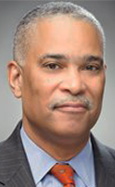 Kent McGuire
Kent McGuire, president and CEO of the Southern Education Foundation, said that the higher rates in the South should not be surprising because the highest rates of poverty and child poverty are in those states as well.
McGuire said that the lack of physical education in many schools is a factor and the growth of charter schools has worsened the situation because most of those schools do not have gymnasiums.
“We have a very weak or fragile infrastructure for engaging kids early in movement and healthy activity,” McGuire said.
The communities that have succeeded in stabilizing or reducing obesity “differ but they have one thing in common: they make the issue a priority and work tirelessly to make it possible to be active,” Cofsky said.
Meanwhile, a National Academies of Science report issued last week showed that poor people are likely to have shorter lives because they are obese and use tobacco, The Washington Post reported.
Nationally, more than 30 percent of adults, nearly 17 percent of 2- to 19-year-olds and more than 8 percent of children ages 2 to 5 are obese, the study said, putting some 78 million Americans at an increased risk for a range of health problems, including heart disease, diabetes and cancer.
Arkansas had the highest adult obesity rate at 35.9 percent, while Colorado had the lowest at 21.3 percent.
The 12th annual report found that rates of obesity now exceed 35 percent in three states (Arkansas, West Virginia and Mississippi), are at or above 30 percent in 22 states, and are not below 21 percent in any.
In 1980, no state had a rate above 15 percent, and in 1991, no state had a rate above 20 percent.
The two organizations view the leveling off nationwide as a sign of progress, Jeff Levi, executive director of the Trust, told reporters in a call, but more needs to be done to encourage healthier eating and more physical exercise, he said.
Even though the adult obesity rate is much higher than the childhood obesity rate, the Robert Wood Johnson Foundation will continue to fight childhood obesity, Abbey Cofsky, a senior program officer, said.
Cofsky said the foundation has committed more than $1 billion to:
- Make sure all children enter kindergarten at a healthy weight.
- Work with parents before children are born.
- Make healthy school environments the norm rather than the exception.
- Eliminate consumption of sugar-sweetened beverages up to age 5.
- Make physical activity part of day for children and youth.
- Make healthy foods and beverages available in every neighborhood.
First Lady Michelle Obama has made improving school meals a key element in her Let’s Move! campaign against childhood obesity, but last week at the White House she honored local officials who have joined her campaign to make physical activity as well as healthier eating easier.
The first lady noted that one in four Americans now live in communities that have joined her campaign.
According to the joint news release, other key findings from The State of Obesity report include:
- Seven of the 10 states with the highest rates are in the South and 23 of the 25 states with the highest rates of obesity are in the South and Midwest.
- Nine of the 10 states with the highest rates of diabetes are in the South. Diabetes rates increased in eight states: Colorado, Hawaii, Kansas, Massachusetts, Missouri, Montana, Ohio and Pennsylvania.
- Native American/Alaska Natives have the highest adult obesity rate, 54 percent, of any racial or ethnic group.
- Nationally, obesity rates are 38 percent higher among blacks than whites; and more than 26 percent higher among Latinos than whites. (Obesity rates for blacks, 47.8 percent; Latinos, 42.5 percent; and whites, 32.6 percent.)
- Adult obesity rates are at or above 40 percent for blacks in 14 states.
- Adult obesity rates are at or above 30 percent in: 42 states for blacks; 30 states for Latinos; and 13 states for whites.
- Obesity rates are 26 percent higher among middle-age adults than among younger adults — rates rise from 30 percent of 20- to 39-year-olds to nearly 40 percent of 40- to 59-year-olds.
- More than 6 percent of adults are severely obese — more than a 125 percent increase in the past two decades. Around 5 percent of children are already severely obese by the ages of 6 to 11.
- Among children and teens (2 to 19 years old), 22.5 percent of Latinos, more than 20 percent of blacks and 14.1 percent of whites are obese.
Kent McGuire, president and CEO of the Southern Education Foundation, said that the higher rates in the South should not be surprising because the highest rates of poverty and child poverty are in those states as well.
McGuire said that the lack of physical education in many schools is a factor and the growth of charter schools has worsened the situation because most of those schools do not have gymnasiums.
“We have a very weak or fragile infrastructure for engaging kids early in movement and healthy activity,” McGuire said.
The communities that have succeeded in stabilizing or reducing obesity “differ but they have one thing in common: they make the issue a priority and work tirelessly to make it possible to be active,” Cofsky said.
Meanwhile, a National Academies of Science report issued last week showed that poor people are likely to have shorter lives because they are obese and use tobacco, The Washington Post reported.
- The State of Obesity: Better Policies for a Healthier America 2015
- The Washington Post — The stunning — and expanding — gap in life expectancy between the rich and the poor
- National Academies of Science — The Growing Gap in Life Expectancy by Income: Implications for Federal Programs and Policy Responses
