Peterson, sugar growers, Mexico seek continuation of suspension agreements
September 16, 2015 |11:59 PM
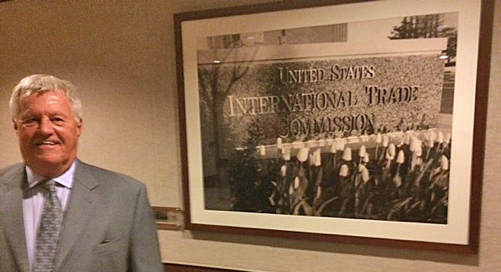
Agriculture Committee ranking member Collin Peterson, D-Minn., poses outside the U.S. International Trade Commission hearing room today. (Jerry Hagstrom/The Hagstrom Report)
House Agriculture Committee ranking member Collin Peterson, D-Minn., U.S. sugar growers and a Mexican government official all testified today in support of allowing the continuation of the agreements that the United States and the Mexican government reached earlier this year to suspend the U.S. investigations of Mexican sugar.
The hearing was held by the U.S. International Trade Commission as part of the government’s antidumping and countervailing duty investigation into sugar from Mexico.
Saying that his district “includes the heart of sugarbeet country,” Peterson noted that Agriculture Undersecretary for Farm and Foreign Agricultural Services Michael Scuse testified that increased Mexican imports had caused the U.S. government to pay sugar farmers $259 million due to low prices. Peterson also said Scuse had testified that the agreements “are the solution to this problem.”
The Commerce Department found in its preliminary determinations that Mexico sold its sugar with a dumping margin of more than 40 percent and countervailing duty margins of up to 50 percent.
Mexico is allowed unlimited access to the U.S. sugar market under the North American Free Trade Agreement, but sending subsidized sugar to the United States at dump prices is illegal under U.S. trade laws.
“I believe the commission should reach an affirmative finding of material injury that allows the suspension agreements to continue," Peterson said.
A panel of beet and cane growers and their lawyers testified in detail about the effects the spike in Mexican sugar imports have had on their industry.
David Berg of American Crystal Sugar in Fargo, N.D., said that the sudden increase in imports and demands from customers for lower prices had been “frightening.”
Kenneth Smith Ramos, a Mexican trade official, denied that the Mexican imports were responsible for the U.S. industry’s problems, but said that the suspension agreements are “an acceptable and livable solution” to a problem in the larger bilateral trade relationship between the two countries.
Sweetener users have criticized the agreements on the grounds that the origin of the problem is in the U.S. sugar program.
The commission is scheduled to vote on the issue on October 20.
