Poe wants to ease Cuba financing, but unsure it will happen
September 11, 2015 |02:26 PM
Rep. Ted Poe, R-Texas, the chairman of the House Foreign Affairs Terrorism, Nonproliferation and Trade Subcommittee, said this week that he favors making it easier for Cuba to finance food purchases from the United States, but he said he has “no idea” when that might happen.
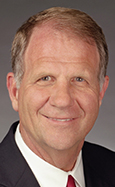 Rep. Ted Poe, R-Texas
“I hope it’s not 50 years from now,” Poe said, referring to the length of time the U.S. embargo on trade with Cuba has been in effect.
After a hearing on U.S. agricultural trade with Cuba, Poe told reporters he believes it will be easier for Congress to change policy by taking action one step at a time rather than trying to repeal the trade embargo, which many Republicans oppose,
“Step by step would be best,” Poe said. But he added he favors change because “the policy from the last 50 years hasn’t had an effect. This embargo punishes Americans, not Cubans.”
Poe is particularly concerned that Cubans have not bought U.S. rice since 2009.
“Rice farmers in my district have been talking about Cuba since the day before I got elected,” said Poe, who was elected to the 2nd District seat in 2004.
He also added that he does not know where House Foreign Affairs Committee Chairman Ed Royce, R-Calif. “would fall on this.”
Rep. Tom Emmer, R-Minn., who has filed a bill to end the embargo, noted that agriculture is one of the two drivers of the his state’s economy, and that Minnesota had been one of the first states to send a delegation to Cuba after sales to Cuba were allowed.
At the hearing, witnesses from the Commerce Department, the Agriculture Department and the Treasury Department testified that, even though the United States has re-established diplomatic relations and agricultural sales to Cuba have been allowed since 2000, they are limited by the embargo in taking more action to encourage Cuba to buy U.S. products.
 Phil Karsting
Phil Karsting, administrator of the Agriculture Department’s Foreign Agricultural Service, noted that U.S. sales to Cuba have dropped by half, from $658 million to $300 million.
Poultry sales have remained “pretty strong,” Karsting said, and sales of soybeans, corn and meal are important, while there have been losses in wheat and rice.
Alimport, a Cuban government agency, remains the purchaser of U.S. foodstuffs, and Karsting said “it is hard for us to get inside the mind of Alimport” because under current law, the Agriculture Department cannot send an agricultural attaché to Cuba.
USDA had a representative in Cuba from 1941 to 1961, Karsting said.
Under current rules, Cuba cannot get credit to buy U.S. products, but John Smith, the acting director of the Office of Foreign Assets Control at Treasury, said that only Congress can change that.
Rep. Ileana Ros-Lehtinen, R-Fla., a critic of liberalized relations with Cuba, noted that Cuba has a reputation for not paying its bills.
Karsting also noted that USDA cannot use trade promotion programs in Cuba and that farm groups have “made clear that having flexibility on trade promotion would help.”
“Within my office, we cannot spend a dollar on export promotion. We would love to be on the ground to have more intelligence,” Karsting said, adding that he meant the ability to have an agricultural attaché in Cuba.
FAS’s Caribbean operations are run out of Miami, he added.
Karsting also noted that increased tourism would lead to more business for hotels.
In response to a question from Rep. Rick Crawford, R-Ark., about what Congress could do to improve sales to Cuba, Smith said that altering the cash-in-advance provisions “would be the place to go.”
But in response to a question about whether Cuban officials can come to the United States to examine food safety at U.S. plants and several other questions, the executive branch officials said some of those answers need to be provided by the State Department, which was not represented at the hearing.
“I hope it’s not 50 years from now,” Poe said, referring to the length of time the U.S. embargo on trade with Cuba has been in effect.
After a hearing on U.S. agricultural trade with Cuba, Poe told reporters he believes it will be easier for Congress to change policy by taking action one step at a time rather than trying to repeal the trade embargo, which many Republicans oppose,
“Step by step would be best,” Poe said. But he added he favors change because “the policy from the last 50 years hasn’t had an effect. This embargo punishes Americans, not Cubans.”
Poe is particularly concerned that Cubans have not bought U.S. rice since 2009.
“Rice farmers in my district have been talking about Cuba since the day before I got elected,” said Poe, who was elected to the 2nd District seat in 2004.
He also added that he does not know where House Foreign Affairs Committee Chairman Ed Royce, R-Calif. “would fall on this.”
Rep. Tom Emmer, R-Minn., who has filed a bill to end the embargo, noted that agriculture is one of the two drivers of the his state’s economy, and that Minnesota had been one of the first states to send a delegation to Cuba after sales to Cuba were allowed.
At the hearing, witnesses from the Commerce Department, the Agriculture Department and the Treasury Department testified that, even though the United States has re-established diplomatic relations and agricultural sales to Cuba have been allowed since 2000, they are limited by the embargo in taking more action to encourage Cuba to buy U.S. products.
Phil Karsting, administrator of the Agriculture Department’s Foreign Agricultural Service, noted that U.S. sales to Cuba have dropped by half, from $658 million to $300 million.
Poultry sales have remained “pretty strong,” Karsting said, and sales of soybeans, corn and meal are important, while there have been losses in wheat and rice.
Alimport, a Cuban government agency, remains the purchaser of U.S. foodstuffs, and Karsting said “it is hard for us to get inside the mind of Alimport” because under current law, the Agriculture Department cannot send an agricultural attaché to Cuba.
USDA had a representative in Cuba from 1941 to 1961, Karsting said.
Under current rules, Cuba cannot get credit to buy U.S. products, but John Smith, the acting director of the Office of Foreign Assets Control at Treasury, said that only Congress can change that.
Rep. Ileana Ros-Lehtinen, R-Fla., a critic of liberalized relations with Cuba, noted that Cuba has a reputation for not paying its bills.
Karsting also noted that USDA cannot use trade promotion programs in Cuba and that farm groups have “made clear that having flexibility on trade promotion would help.”
“Within my office, we cannot spend a dollar on export promotion. We would love to be on the ground to have more intelligence,” Karsting said, adding that he meant the ability to have an agricultural attaché in Cuba.
FAS’s Caribbean operations are run out of Miami, he added.
Karsting also noted that increased tourism would lead to more business for hotels.
In response to a question from Rep. Rick Crawford, R-Ark., about what Congress could do to improve sales to Cuba, Smith said that altering the cash-in-advance provisions “would be the place to go.”
But in response to a question about whether Cuban officials can come to the United States to examine food safety at U.S. plants and several other questions, the executive branch officials said some of those answers need to be provided by the State Department, which was not represented at the hearing.
