Obama, Vilsack issue statements on Cooper’s death
July 20, 2015 |05:25 PM
President Barack Obama and Agriculture Secretary Tom Vilsack have both issued statements on the death of George Cooper, executive director of the White House Initiative on Historically Black Colleges and Universities (HBCUs). Cooper died Sunday.
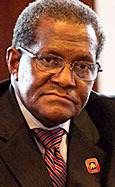
George Cooper
Obama noted that Cooper was a native of Tallahassee, and was educated at Florida Agricultural and Mechanical University and Tuskegee University before receiving his Ph.D. at the University of Illinois at Urbana.
“George spent the majority of his life ensuring that students at our nation’s HBCUs were receiving a quality education and had the necessary resources to succeed and make their communities and our country better,” Obama said. “He served on the faculty at several universities including Alabama A&M University, Tuskegee University, and as president of South Carolina State University. His service extended beyond working with students at institutions. For 17 years, he worked with the U.S. Department of Agriculture’s National Institute of Food and Agriculture, ensuring that HBCUs and other minority-serving institutions were receiving adequate resources to strengthen research and academic programs.
“George’s passing is a great loss for my administration, the HBCU and higher education communities and for everyone that knew him,” Obama concluded.
Vilsack said Cooper “was a fierce advocate for learning and dedicated his life to helping our nation’s historically black colleges and universities carry out their education, research and extension missions. His legacy of service lives on in millions of graduates and all of us who continue to fight to ensure that access to a high-quality education is a reality for every American, no matter where they grew up.”
George Cooper
Obama noted that Cooper was a native of Tallahassee, and was educated at Florida Agricultural and Mechanical University and Tuskegee University before receiving his Ph.D. at the University of Illinois at Urbana.
“George spent the majority of his life ensuring that students at our nation’s HBCUs were receiving a quality education and had the necessary resources to succeed and make their communities and our country better,” Obama said. “He served on the faculty at several universities including Alabama A&M University, Tuskegee University, and as president of South Carolina State University. His service extended beyond working with students at institutions. For 17 years, he worked with the U.S. Department of Agriculture’s National Institute of Food and Agriculture, ensuring that HBCUs and other minority-serving institutions were receiving adequate resources to strengthen research and academic programs.
“George’s passing is a great loss for my administration, the HBCU and higher education communities and for everyone that knew him,” Obama concluded.
Vilsack said Cooper “was a fierce advocate for learning and dedicated his life to helping our nation’s historically black colleges and universities carry out their education, research and extension missions. His legacy of service lives on in millions of graduates and all of us who continue to fight to ensure that access to a high-quality education is a reality for every American, no matter where they grew up.”
