REA posters featured in Milan Art & Food show
July 03, 2015 |12:15 AM
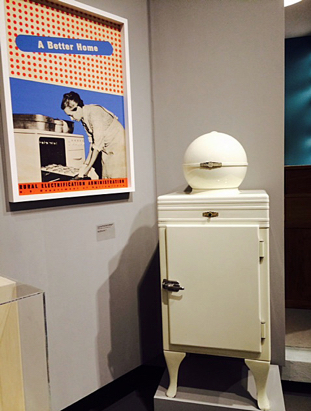 A Rural Electrification Administration poster from the 1930s promotes “A Better Home” with electricity in the “Art and Food” exhibit at the Triennale Museum in Milan. The poster by Lester Beall is displayed alongside an early electric refrigerator. (Jerry Hagstrom/The Hagstrom Report)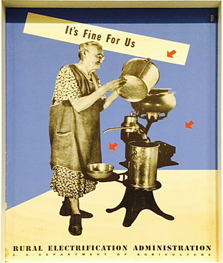
MILAN — It’s hard to imagine how hard the Agriculture Department’s Rural Electrification Administration had to work in the 1930s to convince rural Americans to hook up to electricity — or to imagine the change that meant for food storage and preparation.
But an exhibition here related to Expo Milano has included the posters that renowned graphic artist Lester Beall created for the REA to convince farmers and other rural Americans that electricity would improve their lives.
The Beall posters are included in “Art & Foods: Rituals Since 1851,” an exhibition of works of art and objects related to the preparation and consumption of food since the year the first universal exhibition or world’s fair was held.
The exhibition, curated by historian and critic Germano Celant in the Triennale, an exhibition space in downtown Milan, is included in the price of a ticket to the Expo and well worth the trip.
It begins with the staging of two dining rooms — one for a peasant family, the other for an aristrocratic family — in 1851 and traces the changes in food storage, preparation and consumption up to the present time.
It is a fantastic array that includes paintings, drawings and architectural models, films, objects, documents, books, menus, and even record album covers with food themes. This panorama including kitchen utensils, salt and pepper shakers, old refrigerators, and blenders raises food and the rituals of eating and drinking to the level of art.

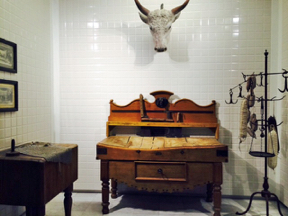
Left: Photograph of an Italian bread delivery boy in the early 20th century. Right: Recreation of a 19th century Italian butcher shop. (Jerry Hagstrom/The Hagstrom Report)

“Igloo Del Pane” (Bread Igloo), 1989, by Mario Merz. (Jerry Hagstrom/The Hagstrom Report)
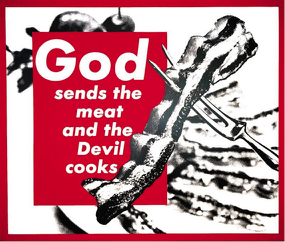

Left: Barbara Kruger’s untitled piece, 1988, featuring the proverb “God sends the meat and the devil cooks.”Right: A giant inflatable ketchup bottle is framed by a portico leading from the museum garden. Daddies is a English brand, now owned by Heinz. (Jerry Hagstrom/The Hagstrom Report)
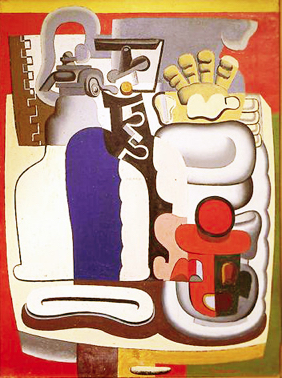

Left: “Nature morte au siphon,” (Still Life with Soda Siphon), 1928, Charles-Édouard Jeanneret-Gris, known as Le Corbusier. Right: “The Arts Club's Woman Chef,” 1935, Francis Edwin Hodge. A portrait of a female chef from an era when there were few. (Jerry Hagstrom/The Hagstrom Report)
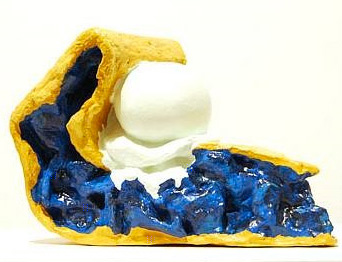
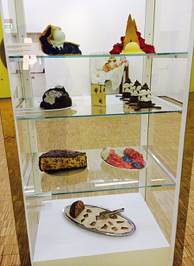
“Paradise Pies IV, Blue,” 2007, a painted cast aluminum pop-art sculpture by husband-and-wife collaborators Claes Oldenburg and Coosje Van Bruggen, is among the food sculptures on display in photo at right. (Jerry Hagstrom/The Hagstrom Report)
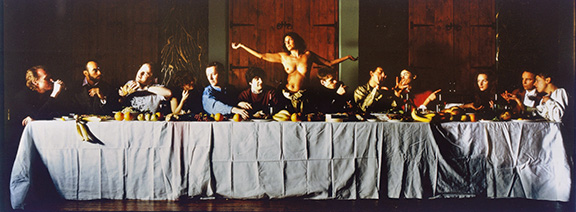
“Wrecked,” 1996, Sam Taylor-Johnson, is modeled on Leonardo da Vinci’s “Last Supper,” substituting the figure of Jesus with a bare-chested woman.
