World Farmers’ Organization grows global voice
June 30, 2015 |11:49 AM
MILAN — In four years of existence, the World Farmers’ Organization’s membership has grown to 70 farm groups and related organizations and it has achieved accredited status at a number of international organizations, Marco Marzano de Marinis, the executive director, told the WFO General Assembly here last week.
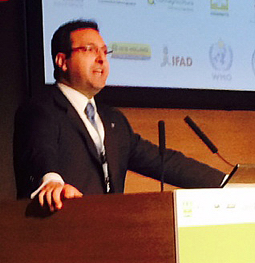 Marco de Marzano de Marinis
WFO was set up by 28 farm groups to give farmers a voice at the United Nations and other international bodies as a successor to the International Federation of Agricultural Producers, a post-war group based in Paris that ceased operations.
WFO set up its offices in 2011 in Rome where the U.N. food agencies — the Food and Agricultural Organization (FAO), the World Food Programme (WFO), and the International Federation for Agricultural Development (IFAD) — are located.
Its 28 founding members included the National Farmers Union in the United States, the National Farmers Union in the United Kingdom, the French farm group known by the acronym FNSEA and Ja Zenchu, the Japanese Central Union of Agricultural Cooperative, but it has expanded to include farm groups in developed and developing countries.
At the present time, Marzano de Marinis said, WFO has become the farmers’ “reference organization” in the following international bodies:
WFO also represents farmers before other agencies such as the World Trade Organization and the World Bank, he said.
“All of humanity should remember that we are all part of a global community in which everyone plays a role,” Marazano de Marinis said in a joint statement with newly elected WFO President Evelyn Nguelka of Zambia.
“Lawyers, engineers, medical doctors, policy makers, they all have a role to play and they are all necessary once in a while in our life. However, the global community should acknowledge and respect the fact that we need farmers at least three times a day.”
WFO was set up by 28 farm groups to give farmers a voice at the United Nations and other international bodies as a successor to the International Federation of Agricultural Producers, a post-war group based in Paris that ceased operations.
WFO set up its offices in 2011 in Rome where the U.N. food agencies — the Food and Agricultural Organization (FAO), the World Food Programme (WFO), and the International Federation for Agricultural Development (IFAD) — are located.
Its 28 founding members included the National Farmers Union in the United States, the National Farmers Union in the United Kingdom, the French farm group known by the acronym FNSEA and Ja Zenchu, the Japanese Central Union of Agricultural Cooperative, but it has expanded to include farm groups in developed and developing countries.
At the present time, Marzano de Marinis said, WFO has become the farmers’ “reference organization” in the following international bodies:
- United Nations Sustainable Development Goals and its post-2015 development goals.
- United National Disaster Risk Reduction global political discussion.
- United Nations Framework Convention on Climate Change.
- United Nations Environmental Program (UNEP).
- Global Alliance on Climate Smart Agriculture.
WFO also represents farmers before other agencies such as the World Trade Organization and the World Bank, he said.
“All of humanity should remember that we are all part of a global community in which everyone plays a role,” Marazano de Marinis said in a joint statement with newly elected WFO President Evelyn Nguelka of Zambia.
“Lawyers, engineers, medical doctors, policy makers, they all have a role to play and they are all necessary once in a while in our life. However, the global community should acknowledge and respect the fact that we need farmers at least three times a day.”
