Vilsack, Vetter promote trade promotion authority
February 20, 2015 |02:10 PM
ARLINGTON, Va. — Agriculture Secretary Tom Vilsack said Thursday that congressional votes on granting President Barack Obama trade promotion authority are still “a close call,” although he and Darci Vetter, the chief agriculture negotiator, both said they are working hard to convince Congress to vote for it.
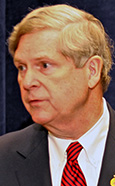 Tom Vilsack
“I think there is work to do. It is a very close call about TPA and there is work that needs to be done,” Vilsack said at the USDA Agricultural Outlook Forum here.
He added that he has been making calls to House Agriculture Committee members and that many are “not aware they have the right to look at the text [of trade agreements] in a confidential way.”
He added that critics “need to understand” that the proposed Trans-Pacific Partnership agreement offers “an opportunity” to include high labor and environmental standards in the agreement.
Sharing the stage with European Union Agriculture Commissioner Phil Hogan, Vilsack said successful completion of the TPP agreement “would create serious momentum” for the proposed Trans-Atlantic Trade and Investment Partnership agreement with the European Union.
 Darci Vetter
In a dinner speech to the agriculture leaders and traders gathered from around the world for the conference, Vetter made the case for both agreements and for TPA. She also thanked the attendees for taking “strange calls at strange times of the day” from her as she works on the agreements and TPA.
She said TPP offers a rare opportunity to negotiate with Japan on tariffs for meat and other products.
“We need to take the opportunity,” she said. Japan already has agreements with Australia, Mexico, Chile, Peru and Singapore, she noted, adding if the United States doesn’t “get in there to take advantage of that preferential access others will.”
Vetter also said TPP would help the potato industry.
Noting that TPP includes a mix of advanced and developing countries with growing middle classes, she said “as convenience foods expand, so does the taste for French fries.”
China, she noted, has been advising the other Asian countries that the United States is demanding too much in the TPP.
“That is not the vision we want to prevail in the region,” Vetter said.
Although the T-TIP negotiations are not as far advanced and include many disagreements, Vetter noted that the United States and the European Union countries have “the deepest trade relationship in the world” and that the agreement would offer farmers a way to present a unified view of high standards to the rest of the world.
An agreement she said, could help farmers on both sides of the Atlantic deal with the high cost of capital and a proliferation of different standards for farmers who want to sell their products across borders.
“There is a perception in Europe that the United States is one giant factory farm,” Vetter said.
She did not mention that her own parents are organic farmers in Nebraska, but noted that there are “a number of approaches” in the United States, and that the United States and the European Union share food safety goals.
The issues of geographic indicators are “difficult, but not insurmountable,” she said.
Asked by a Brazilian attendee if the U.S. attention to bilateral agreements is not hurting efforts to revive the World Trade Organization Doha round, Vetter said, “I wish we were making more progress multilaterally,” but in the meantime the United States needs to reach agreements with countries that are willing to negotiate “while in the negotiations in Geneva are stalled” because “it is to our advantage.”
“I think there is work to do. It is a very close call about TPA and there is work that needs to be done,” Vilsack said at the USDA Agricultural Outlook Forum here.
He added that he has been making calls to House Agriculture Committee members and that many are “not aware they have the right to look at the text [of trade agreements] in a confidential way.”
He added that critics “need to understand” that the proposed Trans-Pacific Partnership agreement offers “an opportunity” to include high labor and environmental standards in the agreement.
Sharing the stage with European Union Agriculture Commissioner Phil Hogan, Vilsack said successful completion of the TPP agreement “would create serious momentum” for the proposed Trans-Atlantic Trade and Investment Partnership agreement with the European Union.
In a dinner speech to the agriculture leaders and traders gathered from around the world for the conference, Vetter made the case for both agreements and for TPA. She also thanked the attendees for taking “strange calls at strange times of the day” from her as she works on the agreements and TPA.
She said TPP offers a rare opportunity to negotiate with Japan on tariffs for meat and other products.
“We need to take the opportunity,” she said. Japan already has agreements with Australia, Mexico, Chile, Peru and Singapore, she noted, adding if the United States doesn’t “get in there to take advantage of that preferential access others will.”
Vetter also said TPP would help the potato industry.
Noting that TPP includes a mix of advanced and developing countries with growing middle classes, she said “as convenience foods expand, so does the taste for French fries.”
China, she noted, has been advising the other Asian countries that the United States is demanding too much in the TPP.
“That is not the vision we want to prevail in the region,” Vetter said.
Although the T-TIP negotiations are not as far advanced and include many disagreements, Vetter noted that the United States and the European Union countries have “the deepest trade relationship in the world” and that the agreement would offer farmers a way to present a unified view of high standards to the rest of the world.
An agreement she said, could help farmers on both sides of the Atlantic deal with the high cost of capital and a proliferation of different standards for farmers who want to sell their products across borders.
“There is a perception in Europe that the United States is one giant factory farm,” Vetter said.
She did not mention that her own parents are organic farmers in Nebraska, but noted that there are “a number of approaches” in the United States, and that the United States and the European Union share food safety goals.
The issues of geographic indicators are “difficult, but not insurmountable,” she said.
Asked by a Brazilian attendee if the U.S. attention to bilateral agreements is not hurting efforts to revive the World Trade Organization Doha round, Vetter said, “I wish we were making more progress multilaterally,” but in the meantime the United States needs to reach agreements with countries that are willing to negotiate “while in the negotiations in Geneva are stalled” because “it is to our advantage.”
