Tulane professor: ‘Calorie-dense, nutrient-poor foods’ a health problem
October 30, 2014 | 03:53 PM
NEW YORK CITY — “Easy access to calorie-dense, nutrient-poor foods” has become a health problem on which doctors should focus, Tim Harlan, an internist who is the executive director of the Goldring Center for Culinary Medicine at Tulane University said here this week at the James Beard Foundation Food Conference.
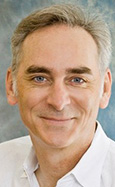 Tim Harlan
But in the medical profession’s defense, he said, the problem of easy access to unhealthy foods has occurred only in the last half century, while doctors have focused for the past 2,000 years on “treating the disease in front of us.”
The lack of attention to the issues of diet and exercise is so bad in the medical community, Harlan said, that doctors often attend conferences at which they sit for a long lecture and then have breaks at which unhealthy foods are served.
He illustrated his point by showing a picture of salted pretzels that he said were served after doctors at the American Society of Hypertension meeting had spent 90 minutes listening to a lecture on “the ravages of salt” in the American diet.
The Tulane University Medical School, located in New Orleans, is trying to break through that barrier by being the first medical school to put a chef on the faculty and to develop a food curriculum for medical students.
Harlan, who was pursuing a degree in hotel and restaurant management when he decided to go to medical school, said the goal of the food curriculum is to teach “the generally self-satisfied young men and women” who become medical students, residents and interns “to eat healthy” and then then teach the budding doctors how to use that information “in conversation with their patients.”
Harlan said the components to the food program at Tulane include:
He also issued a “call to action” to conference attendees. “If you have a doctor, go to him and say ‘go to Tulane’ and take their program,” Harlan said.
Seamus Mullen, a New York chef who has collaborated with Harlan, told the conference that after he was diagnosed with rheumatoid arthritis in 2007 his grandmother urged him to think about his diet.
Mullen said he ate healthier exercised and lost weight and his condition improved.
But when he told his doctor that he believed his diet helped him, his doctor replied only that he should continue it “if it makes you feel better.”
Mullen, author of the cookbook “Hero Food,” noted that while drugs can help inflammation quickly, it takes time for a change in diet to have an effect, and that patients have to understand that.
“Doctors are evidence-based, chefs are more intuitive,” Harlan said as he described what chefs and medical students learn from each other.
Harlan said doctors had examined menus in one restaurant and determined that each meal was providing people twice the sodium they should consume in a day. The chefs reduced the sodium by different amounts and found that the diners preferred the meals with the biggest reduction, which was 35 percent.
But Harlan said that if people are told they are eating a healthy meal they assume it is not as tasty.
“Patrons are happy with less salt. Just don’t tell them,” he said.
But in the medical profession’s defense, he said, the problem of easy access to unhealthy foods has occurred only in the last half century, while doctors have focused for the past 2,000 years on “treating the disease in front of us.”
The lack of attention to the issues of diet and exercise is so bad in the medical community, Harlan said, that doctors often attend conferences at which they sit for a long lecture and then have breaks at which unhealthy foods are served.
He illustrated his point by showing a picture of salted pretzels that he said were served after doctors at the American Society of Hypertension meeting had spent 90 minutes listening to a lecture on “the ravages of salt” in the American diet.
The Tulane University Medical School, located in New Orleans, is trying to break through that barrier by being the first medical school to put a chef on the faculty and to develop a food curriculum for medical students.
Harlan, who was pursuing a degree in hotel and restaurant management when he decided to go to medical school, said the goal of the food curriculum is to teach “the generally self-satisfied young men and women” who become medical students, residents and interns “to eat healthy” and then then teach the budding doctors how to use that information “in conversation with their patients.”
Harlan said the components to the food program at Tulane include:
- Applying the principles of the Mediterranean diet to the American kitchen and giving students “short, simple messages that they will repeat over and over.”
- Educating the people of Louisiana on healthy eating because “Louisiana competes to be one of the unhealthiest states” in the country.
- Conducting research to determine whether healthy eating really improves people’s health. Medical researchers need to “prove the efficacy” of this approach, Harlan said, and if it doesn’t have an impact “then we shouldn’t be doing this.”
- Forging a relationship between the medical school and culinary schools. Culinary schools host medical students in their kitchens, Harlan said, and they work “side by side” with culinary students so that they are “all learning together” about healthy eating.”
- Creating continuing medical education on the relationship between food and health. Harlan said he has created a module of courses that doctors can take, and noted that eight other medical schools including the University of California at Los Angeles and Rutgers have adopted the Tulane curriculum.
He also issued a “call to action” to conference attendees. “If you have a doctor, go to him and say ‘go to Tulane’ and take their program,” Harlan said.
Seamus Mullen, a New York chef who has collaborated with Harlan, told the conference that after he was diagnosed with rheumatoid arthritis in 2007 his grandmother urged him to think about his diet.
Mullen said he ate healthier exercised and lost weight and his condition improved.
But when he told his doctor that he believed his diet helped him, his doctor replied only that he should continue it “if it makes you feel better.”
Mullen, author of the cookbook “Hero Food,” noted that while drugs can help inflammation quickly, it takes time for a change in diet to have an effect, and that patients have to understand that.
“Doctors are evidence-based, chefs are more intuitive,” Harlan said as he described what chefs and medical students learn from each other.
Harlan said doctors had examined menus in one restaurant and determined that each meal was providing people twice the sodium they should consume in a day. The chefs reduced the sodium by different amounts and found that the diners preferred the meals with the biggest reduction, which was 35 percent.
But Harlan said that if people are told they are eating a healthy meal they assume it is not as tasty.
“Patrons are happy with less salt. Just don’t tell them,” he said.
