Beverage calorie reduction agreement announced at Clinton Global Initiative
September 26, 2014 | 10:04 AM

NEW YORK CITY — Journalists covering the Clinton Global Initiative meeting here this week got a taste of the future of sodas when the snacks provided to them included 7.5 ounce cans of Coca Cola and Sprite clearly marked 90 calories each, rather than the usual 12 ounce cans marked 140 calories.
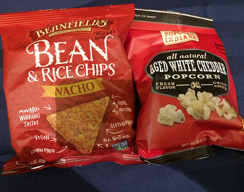
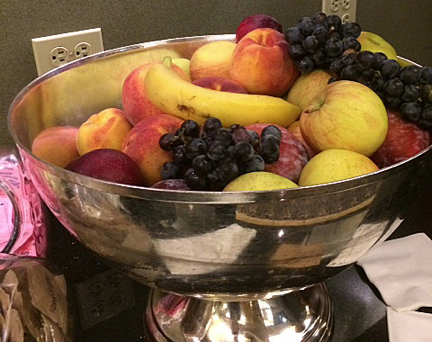
Other snacks provided to journalists varied from the usual pretzels to innovative but still high-calorie items, to fresh fruit.
The snacks were provided as the American Beverage Association and its members joined with the Alliance for a Healthier Generation founded by the American Heart Association and the Clinton Foundation to announce a new agreement to decrease beverage calories in the American diet by 20 percent by 2025.
Former President Bill Clinton, American Beverage Association CEO Susan Neely and Alliance for a Healthier Generation CEO Howell Wechsler made the announcement on Tuesday. They were joined on stage by Wendy Clark, president of sparkling brands and strategic marketing for Coca-Cola North America; Rodger L. Collins, president, packaged beverages, Dr Pepper Snapple Group; and Albert P. Carey, CEO, PepsiCo Americas Beverages.
“Our work with beverage companies to reduce the number of calories shipped to schools by 90 percent demonstrates the power of creative cooperation,” Clinton said in praising the voluntary effort.
The event garnered articles in national publications for Clinton and the companies, but critics also noted that the beverage companies are campaigning against taxes on sodas. The articles also pointed out that American consumption of sodas has already been going down as concern about obesity and diabetes have risen.
The beverage companies promised to leverage their marketing, innovation and distribution programs “to increase and sustain consumer interest in and access to beverage options that help them reduce their calories, including smaller portion sizes, water, and other no or lower calorie beverages, as well as engage in consumer education and outreach efforts.”
The companies also promised to launch a national initiative in low-income and minority communities where consumption of sweetened beverages is high and “where there has been less interest in/or access to such options.”
According to a news release from the Alliance for a Healthier Generation, the companies will offer sodas in smaller portion sizes, plus water and other no- or lower-calorie beverages. Each beverage company will provide calorie counts, and promote calorie awareness on all beverage company-controlled point-of-sale equipment nationwide, including more than 3 million vending machines, self-serve fountain dispensers, and retail coolers in convenience stores, restaurants and other locations.
In the communities of “less interest in and/or access to options,” the companies committed themselves to achieving a 20 percent reduction by:
- Promoting consumption of their bottled water products
- Introducing and expanding new lower-calorie products and smaller-portion packages
- Featuring only reduced-calorie beverages in product placements such as end-aisle and checkout displays
- Repositioning reduced-calorie beverages on shelves
- Providing coupons and other promotions of no/lower-calorie options, including taste tests and sampling programs.
“This is the single-largest voluntary effort by an industry to help fight obesity and leverages our companies’ greatest strengths in marketing, innovation and distribution,” Neely said in the news release.
“This initiative will help transform the beverage landscape in America. It takes our efforts to provide consumers with more choices, smaller portions and fewer calories to an ambitious new level.”
The beverage companies will retain an independent, third-party evaluator, in conjunction with the Alliance for a Healthier Generation, to track progress and interim benchmarks toward their commitments.
The beverage industry and the Alliance will work jointly to define the reporting schedule for all aspects of the agreement.