Bertram named chief scientist at USAID’s Bureau of Food Security
August 27, 2014 | 06:53 PM
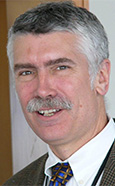
U.S. Agency for International Development Administrator Rajiv Shah has named Rob Bertram as the chief scientist and strategic officer in the Bureau of Food Security, which manages the Feed the Future program.
The appointment was announced in a memo to staff last week.
A USAID spokesman confirmed Bertram’s appointment late today and said he would lead the agency’s efforts to advance research and technology development in international food aid and agricultural development, is President Barack Obama’s signature foreign aid program.
The spokesman also said that Julie Howard, who held the post, has left the agency to continue her work on food aid and agricultural development outside government service.
A career civil servant, Bertram will report to Tjada D’Oyen McKenna, who heads the Feed the Future program.
The appointment of a senior civil servant to a high position within the Bureau for Food Security may prove reassuring to advocates who have worried that the bureau and the Feed the Future program are creations of the Obama administration and dominated by political appointees, and thus could be dismantled in a future administration.
Rep. Betty McCollum, D-Minn., has introduced legislation to make Feed the Future a permanent part of USAID's structure, but it has proven difficult to convince Congress to pass that bill.
Bertram, who has worked for USAID for more than 20 years, has been director for USAID’s Office of Agriculture, Research and Policy since 2010. From 2008 to 2010 he served as director of USAID’s Office of Environment & Science Policy in the Bureau of Economic Growth, Agriculture and Trade.
Before that he was the team leader on international research and biotechnology at USAID, adviser on multilateral research and science advisor in USAID’s Office of Agriculture. Early in his career, Bertram was an international training officer for the Agriculture Department and in Aleppo, Syria designed and implemented a research training program for 22 agricultural development specialists from countries in Africa, the Middle East and South Asia.
From 1990 to 1991, he was a visiting scientist at Washington University in St. Louis where he conducted research on cassava and related wild species, using molecular techniques to explain the genetic relationships of Africa’s top food crop. His research, conducted while he was on leave from USAID, was supported by a Rockefeller Foundation grant.
Bertram has chaired or served on many international committees and is the author or co-author of numerous scientific papers. He served on the Genetic Resources Policy Committee of the Consultative Group on International Research (CGIAR), an international consortium of agricultural research institutions, and chaired the advisory group reviewing the CGIAR System Reform Process 2013.
He has also developed expanded collaborative relationships with Bill and Melinda Gates Foundation and USAID Missions since 2006, co-chaired the Pakistan-U.S. Science and Technology Cooperation Program since 2005, led the establishment of Sustainable Commercialization of Seed In Africa (SCOSA) from 2004 to 2009 and co-chaired the U.S.-India Joint Working Group on Agricultural Biotechnology from 2004 to 2009.
Bertram holds a bachelor of science degree from the University of California at Davis, a master of science degree in plant breeding from the University of Minnesota, a master of arts degree in Middle East studies from Georgetown University, and a doctoral degree in botany from the University of Maryland.
