USDA: Regional planning rule to go into effect in 2015
May 01, 2014 | 06:19 PM
The Agriculture Department has begun working on the rule to allow rural communities to engage in regional planning under USDA rural development programs, but it will not go into effect until 2015, a key USDA official said today.

Doug O’Brien
Agriculture Deputy Undersecretary for Rural Development Doug O’Brien praised Congress for including a provision in the farm bill to allow USDA funds to be used for multi-jurisdictional rural planning, and said that USDA has begun writing the rule, but that it can’t be fully implemented until next year.
“Rural communities need to create regional strategies to remain competitive in domestic and international markets,” O’Brien said in his opening statement at a Senate Agriculture Jobs, Rural Economic Growth and Energy Innovation Subcommittee hearing.
“Regional strategies use assets more effectively, invest more productively and grow economies more quickly,” he added.

Sen. Heitkamp, D-N.D.
“ ‘Regional strategies’ may sound vague, but the main point is that they target resources to where they will have the most impact locally,” said Sen. Heitkamp, D-N.D., who was holding her first hearing as a subcommittee chairwoman.
That could mean using resources to modernize a hospital as part of a population retention strategy so it can support more people in a community and add state-of-the-art services,” Heitkamp continued.
“It could mean working with multiple counties and state officials to install high-speed Internet services in homes in those areas to support a regional plan to attract food processing businesses to locate closer to the farm. Or it could mean supporting local non-profits and businesses by encouraging them to promote job training initiatives that meet the needs of a prominent industry in a particular region.”
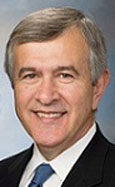
Sen. Mike Johanns, R-Neb.
Sen. Mike Johanns, R-Neb., said he was worried that regional planning could mean that only the largest town in the area would get all the attention and resources.
“It would be terribly unfortunate if five years from now we look back and see the regional planning resulted in 90 percent going to the biggest town in the region and only 10 percent spread around the rest,” Johanns said. The biggest town may already be “doing the right thing already,” he noted.
But O’Brien said USDA would would work with the communities to avoid that outcome and take other safeguards to make sure the smallest, neediest communities get attention.
A panel of economic development officials also explained how they are using regional planning or want to use it.
Dawn Keeley, the executive director of the Red River Regional Council, a four-county region in North Dakota bordering Minnesota and Manitoba, said that a regional approach can “leverage” resources, particularly in areas that have undergone population loss.
Doug O’Brien
Agriculture Deputy Undersecretary for Rural Development Doug O’Brien praised Congress for including a provision in the farm bill to allow USDA funds to be used for multi-jurisdictional rural planning, and said that USDA has begun writing the rule, but that it can’t be fully implemented until next year.
“Rural communities need to create regional strategies to remain competitive in domestic and international markets,” O’Brien said in his opening statement at a Senate Agriculture Jobs, Rural Economic Growth and Energy Innovation Subcommittee hearing.
“Regional strategies use assets more effectively, invest more productively and grow economies more quickly,” he added.
Sen. Heitkamp, D-N.D.
“ ‘Regional strategies’ may sound vague, but the main point is that they target resources to where they will have the most impact locally,” said Sen. Heitkamp, D-N.D., who was holding her first hearing as a subcommittee chairwoman.
That could mean using resources to modernize a hospital as part of a population retention strategy so it can support more people in a community and add state-of-the-art services,” Heitkamp continued.
“It could mean working with multiple counties and state officials to install high-speed Internet services in homes in those areas to support a regional plan to attract food processing businesses to locate closer to the farm. Or it could mean supporting local non-profits and businesses by encouraging them to promote job training initiatives that meet the needs of a prominent industry in a particular region.”
Sen. Mike Johanns, R-Neb.
Sen. Mike Johanns, R-Neb., said he was worried that regional planning could mean that only the largest town in the area would get all the attention and resources.
“It would be terribly unfortunate if five years from now we look back and see the regional planning resulted in 90 percent going to the biggest town in the region and only 10 percent spread around the rest,” Johanns said. The biggest town may already be “doing the right thing already,” he noted.
But O’Brien said USDA would would work with the communities to avoid that outcome and take other safeguards to make sure the smallest, neediest communities get attention.
A panel of economic development officials also explained how they are using regional planning or want to use it.
Dawn Keeley, the executive director of the Red River Regional Council, a four-county region in North Dakota bordering Minnesota and Manitoba, said that a regional approach can “leverage” resources, particularly in areas that have undergone population loss.
