Lucas to relinquish Ag chairmanship, Conaway campaigns for it while King demurs
April 09, 2014 | 10:33 AM
House Agriculture Committee Chairman Frank Lucas, R-Okla., said Monday he will give up the chairmanship of the committee at the end of his term without a fight, while Rep. Michael Conaway, R-Texas, said he has already been campaigning to get the post and Rep. Steve King, R-Iowa, another candidate, said he has not decided whether to pursue it.
Lucas, Conaway and King all spoke to the North American Agricultural Journalists on Tuesday.
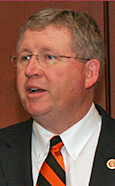
Rep. Frank Lucas, R-Okla.
Lucas, who faces the GOP Caucus’s limit of six years for the leadership of a committee, said he has decided to relinquish the chairmanship on schedule because he believes “the odds of waivers being given are almost nonexistent.”
He added that he likes to think that he handled his leadership responsibilities well and that he will have future leadership responsibilities in the House, but that he is not in immediate line for a chairmanship of the two other committees on which he serves, Financial Services and Science.
Lucas noted that he “off sync” in becoming chairman of one of those committees since he ranks third on Financial Services and fifth on Science. But he added he hopes, “I will be a subcommittee chairman somewhere in the cycle.”
“I will never leave the Ag committee,” Lucas added, noting that his college degree is in agriculture, his background is in agriculture, and that it is part of his personality.
On policy issues, Lucas said he wants to work on upstream flood control systems and dams and that he wants to create “a rationale” not only for rehabilitation of dams but also for new construction.

Rep. Michael Conaway, R-Texas
Conaway told the journalists that Lucas is leaving “big shoes to fill,” but that he hopes his own performance including being chairman of the House Ethics Committee have “demonstrated a work ethic that my peers respect” and that will lead the Republican Steering Committee to choose him as the next chairman.
Conaway said that his push to become House Agriculture Committee chairman “is a campaign just like any other” and that he started approaching steering committee members last year.
“It is all about convincing folks you are the best chairman,” Conaway said, adding that seniority has a” little bit” to do with the selection.
Conaway said he is neutral on the issue of whether Rep. Tim Huelskamp, R-Kan., should be allowed to rejoin the committee. Even though Huelskamp holds the western Kansas district once held by Pat Roberts, a former House Agriculture Committee chairman who is now in the Senate, and Sen. Jerry Moran, both Republicans, the House leadership removed Huelskamp from the committee because he was uncooperative.
Conaway said it is up to Huelskamp to convince the steering committee that he should be put back on it and even to indicate whether he is interested.
It all depends, Conaway said, whether Huelskamp “can represent to the steering committee that he is an appropriate member to represent production agriculture.”
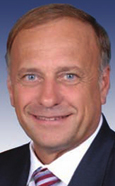
Rep. Steve King, R-Iowa
Rep. Steve King, R-Iowa, has also expressed an interest in the chairmanship in the past, but on Tuesday said he has not decided whether to pursue it.
King said that he made a decision “I wanted a farm bill passed” and that he wanted to be “a calming influence on the committee” during that process and was not going to “upset the farm bill” with a pursuit of the chairmanship during that time.
King consistently supported the farm bill even when conservatives voted against elements of it.
“I am not yet prepared to make a prediction on what I am going to do. It is under consideration,” King said.
During the meeting with the agriculture writers, King also vigorously defended his opposition to immigration reform even though almost all agriculture groups favor it.
King said that many of the people pushing for immigration reform are “people at the upper end of the economic table” who want cheap labor.
Putting together the people who would milk cows, clean hotel rooms and work on information technology is “a giant mosaic argument,” but “a mosaic without an artist is a collection of pretty little symbols glued to the wall.”
King said that the highest unemployment rate in the country is at the lowest levels. He noted that a generation ago the wage rates at a meat packing plant in Storm Lake, Iowa, were about the same as for someone with a college degree but that “wages have been suppressed” due to the arrival of immigrant laborers.
The United States, he said, “needs a tighter labor supply, not a looser supply” to get people above the poverty level. The alternative, he said, is permanent welfare programs with people using multiple programs such as housing and food stamps to get above the poverty level.
Many people in Congress, King said, are not looking at “the big picture” of this issue but at the politics of it.
Lucas, Conaway and King all spoke to the North American Agricultural Journalists on Tuesday.
Rep. Frank Lucas, R-Okla.
Lucas, who faces the GOP Caucus’s limit of six years for the leadership of a committee, said he has decided to relinquish the chairmanship on schedule because he believes “the odds of waivers being given are almost nonexistent.”
He added that he likes to think that he handled his leadership responsibilities well and that he will have future leadership responsibilities in the House, but that he is not in immediate line for a chairmanship of the two other committees on which he serves, Financial Services and Science.
Lucas noted that he “off sync” in becoming chairman of one of those committees since he ranks third on Financial Services and fifth on Science. But he added he hopes, “I will be a subcommittee chairman somewhere in the cycle.”
“I will never leave the Ag committee,” Lucas added, noting that his college degree is in agriculture, his background is in agriculture, and that it is part of his personality.
On policy issues, Lucas said he wants to work on upstream flood control systems and dams and that he wants to create “a rationale” not only for rehabilitation of dams but also for new construction.
Rep. Michael Conaway, R-Texas
Conaway told the journalists that Lucas is leaving “big shoes to fill,” but that he hopes his own performance including being chairman of the House Ethics Committee have “demonstrated a work ethic that my peers respect” and that will lead the Republican Steering Committee to choose him as the next chairman.
Conaway said that his push to become House Agriculture Committee chairman “is a campaign just like any other” and that he started approaching steering committee members last year.
“It is all about convincing folks you are the best chairman,” Conaway said, adding that seniority has a” little bit” to do with the selection.
Conaway said he is neutral on the issue of whether Rep. Tim Huelskamp, R-Kan., should be allowed to rejoin the committee. Even though Huelskamp holds the western Kansas district once held by Pat Roberts, a former House Agriculture Committee chairman who is now in the Senate, and Sen. Jerry Moran, both Republicans, the House leadership removed Huelskamp from the committee because he was uncooperative.
Conaway said it is up to Huelskamp to convince the steering committee that he should be put back on it and even to indicate whether he is interested.
It all depends, Conaway said, whether Huelskamp “can represent to the steering committee that he is an appropriate member to represent production agriculture.”
Rep. Steve King, R-Iowa
Rep. Steve King, R-Iowa, has also expressed an interest in the chairmanship in the past, but on Tuesday said he has not decided whether to pursue it.
King said that he made a decision “I wanted a farm bill passed” and that he wanted to be “a calming influence on the committee” during that process and was not going to “upset the farm bill” with a pursuit of the chairmanship during that time.
King consistently supported the farm bill even when conservatives voted against elements of it.
“I am not yet prepared to make a prediction on what I am going to do. It is under consideration,” King said.
During the meeting with the agriculture writers, King also vigorously defended his opposition to immigration reform even though almost all agriculture groups favor it.
King said that many of the people pushing for immigration reform are “people at the upper end of the economic table” who want cheap labor.
Putting together the people who would milk cows, clean hotel rooms and work on information technology is “a giant mosaic argument,” but “a mosaic without an artist is a collection of pretty little symbols glued to the wall.”
King said that the highest unemployment rate in the country is at the lowest levels. He noted that a generation ago the wage rates at a meat packing plant in Storm Lake, Iowa, were about the same as for someone with a college degree but that “wages have been suppressed” due to the arrival of immigrant laborers.
The United States, he said, “needs a tighter labor supply, not a looser supply” to get people above the poverty level. The alternative, he said, is permanent welfare programs with people using multiple programs such as housing and food stamps to get above the poverty level.
Many people in Congress, King said, are not looking at “the big picture” of this issue but at the politics of it.
