Biodiesel industry to remind Obama he started it all
January 21, 2014 | 08:46 PM
SAN DIEGO — The biodiesel industry, angered by the Environmental Protection Agency’s proposal to cut back the biodiesel mandate under the Renewable Fuel Standard, is planning a major campaign to remind President Barack Obama that as a senator he co-sponsored the bill that created the standard that allowed the industry to grow.
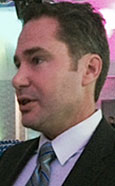
Joe Jobe
“Sen. Obama’s policy vision is now President Obama’s law to implement,” said National Biodiesel Board CEO Joe Jobe. “It is mission critical that we remind President Obama and his administration of his history with this law. We will have to do so loudly and with such volume that the president himself hears it.”
In its draft rule defining annual renewable fuel volumes under for the RFS, the EPA has left the biodiesel target for 2014 and 2015 at 1.28 billion gallons, the same target level as 2013, but down sharply from estimated 2013 production of 1.7 billion gallons and the industry’s annualized production rate of about 2 billion gallons since July
Jobe told reporters that producers consider the 1.28 level to be a 50 percent cut since the potential for production is so great.
Comments on the proposed EPA rule are due by January 28, and Jobe said NBB would make it as easy as possible for the farmers, processors and others attending the convention to file comments on the rule.
Jobe told reporters that the proposal not to increase the mandate combined with the expiration of the biodiesel tax credit has put some producers in the difficult position of trying to decide whether to lay workers off or whether to default on their home mortgages to meet their payrolls.
He also told reporters that if the final rule is similar to the proposed rule, the biodiesel industry will consider, as other renewable fuel groups have, suing EPA on the grounds that the new rule violates the RFS statute because the agency is supposed to change the mandates only if damages, severe economic hardship and inadequate supply have been proven.
Jobe told The Hagstrom Report that he did not want to speculate on whether the decision on the rule was made at EPA, at the Office of Management and Budget or higher up in the White House, but that he considers the background work on the rule to be “very, very sloppy,” that EPA ignored recent data that the industry submitted, and that the agency’s rule published in the Federal Register contained factual errors.
“It’s just incredible, the sloppiness and ineptitude,” he said.
In his speech, Jobe explained that in 2006, then-Sen. Obama, D-Ill., joined with former Sen. Richard Lugar, R-Ind., to propose the establishment of what eventually came to be known as the Alternative Diesel Standard.
“It proposed blending biofuel into the diesel fuel pool,” he said. “It ramped up to 2 billion gallons of biodiesel in the diesel pool by 2015, a number that was forward-thinking when proposed and today is well within reach. The policy evolved and was ultimately passed as RFS-2.”
In December 2007, he said, Obama “ran for president including biodiesel as part of his campaign specifically, and won. He campaigned again in 2012 supporting renewable energy and biodiesel, and he won again,” Jobe said.
“What ultimately became the RFS-2 was first proposed by then Sen. Obama, but members of Obama’s own administration have forgotten this history.”
Jobe said he believes that EPA’s reasoning in changing the RFS was motivated principally by concern that, with the decline in gasoline consumption, current levels of ethanol are coming up against the blend wall, but that the administration had been influenced by the petroleum industry’s determination to repeal the RFS.
“There was tremendous pressure applied by members of Congress who accept contributions from the petroleum industry,” he said, also noting that biodiesel does not contribute to the ethanol blend wall problem.
Jobe devoted much of his speech to comparing the development of the petroleum industry — which he calls Big Oil — to the biodiesel industry, and reminding his membership of the dystopian future predicted in writer George Orwell’s 1949 book “1984.”
“We have to be strong, and unified, and loud, and make our voices heard,” Jobe said. “History gives us glimpses of game-changing pivotal moments in time. 2014 represents one of those pivotal moments. It is up to us to make sure that 2014 does not become 1984. That Big Oil is not allowed to become Big Brother.”
Joe Jobe
“Sen. Obama’s policy vision is now President Obama’s law to implement,” said National Biodiesel Board CEO Joe Jobe. “It is mission critical that we remind President Obama and his administration of his history with this law. We will have to do so loudly and with such volume that the president himself hears it.”
In its draft rule defining annual renewable fuel volumes under for the RFS, the EPA has left the biodiesel target for 2014 and 2015 at 1.28 billion gallons, the same target level as 2013, but down sharply from estimated 2013 production of 1.7 billion gallons and the industry’s annualized production rate of about 2 billion gallons since July
Jobe told reporters that producers consider the 1.28 level to be a 50 percent cut since the potential for production is so great.
Comments on the proposed EPA rule are due by January 28, and Jobe said NBB would make it as easy as possible for the farmers, processors and others attending the convention to file comments on the rule.
Jobe told reporters that the proposal not to increase the mandate combined with the expiration of the biodiesel tax credit has put some producers in the difficult position of trying to decide whether to lay workers off or whether to default on their home mortgages to meet their payrolls.
He also told reporters that if the final rule is similar to the proposed rule, the biodiesel industry will consider, as other renewable fuel groups have, suing EPA on the grounds that the new rule violates the RFS statute because the agency is supposed to change the mandates only if damages, severe economic hardship and inadequate supply have been proven.
Jobe told The Hagstrom Report that he did not want to speculate on whether the decision on the rule was made at EPA, at the Office of Management and Budget or higher up in the White House, but that he considers the background work on the rule to be “very, very sloppy,” that EPA ignored recent data that the industry submitted, and that the agency’s rule published in the Federal Register contained factual errors.
“It’s just incredible, the sloppiness and ineptitude,” he said.
In his speech, Jobe explained that in 2006, then-Sen. Obama, D-Ill., joined with former Sen. Richard Lugar, R-Ind., to propose the establishment of what eventually came to be known as the Alternative Diesel Standard.
“It proposed blending biofuel into the diesel fuel pool,” he said. “It ramped up to 2 billion gallons of biodiesel in the diesel pool by 2015, a number that was forward-thinking when proposed and today is well within reach. The policy evolved and was ultimately passed as RFS-2.”
In December 2007, he said, Obama “ran for president including biodiesel as part of his campaign specifically, and won. He campaigned again in 2012 supporting renewable energy and biodiesel, and he won again,” Jobe said.
“What ultimately became the RFS-2 was first proposed by then Sen. Obama, but members of Obama’s own administration have forgotten this history.”
Jobe said he believes that EPA’s reasoning in changing the RFS was motivated principally by concern that, with the decline in gasoline consumption, current levels of ethanol are coming up against the blend wall, but that the administration had been influenced by the petroleum industry’s determination to repeal the RFS.
“There was tremendous pressure applied by members of Congress who accept contributions from the petroleum industry,” he said, also noting that biodiesel does not contribute to the ethanol blend wall problem.
Jobe devoted much of his speech to comparing the development of the petroleum industry — which he calls Big Oil — to the biodiesel industry, and reminding his membership of the dystopian future predicted in writer George Orwell’s 1949 book “1984.”
“We have to be strong, and unified, and loud, and make our voices heard,” Jobe said. “History gives us glimpses of game-changing pivotal moments in time. 2014 represents one of those pivotal moments. It is up to us to make sure that 2014 does not become 1984. That Big Oil is not allowed to become Big Brother.”
