Farm bill conference in question as dairy issue looms; Costa says bill likely to come up first in Senate
January 08, 2014 | 07:25 PM
House Agriculture Committee Chairman Frank Lucas, R-Okla., said today that is unclear whether there will be a meeting of farm bill conferees this week and that the issue of dairy policy has not been resolved.
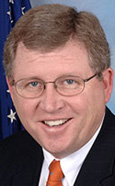
Rep. Frank Lucas, R-Okla.
Lucas, who is chairing the farm bill conference, told reporters at about 4 p.m. that it was too early in the day to say whether there would be a conference on Thursday.
“I want it so bad you can’t imagine,” Lucas said as he walked down a Capitol hallway after a vote on the House floor.
Lucas’s talk while walking with reporters followed a non-encounter this morning when he, House Agriculture Committee ranking member Collin Peterson, D-Minn., and Senate Agriculture ranking member Thad Cochran, R-Miss., met with Senate Agriculture Committee Chairman Debbie Stabenow, D-Mich., in her personal office and avoided reporters by leaving through a back door to Stabenow’s office.
Stabenow did not meet with journalists but told one reporter that she and her colleagues are “very close” to final agreement. Aides to the principal negotiators told reporters that rooms have been booked for the conference in case they are needed.
As has so often been the case with past farm bills, dairy has emerged as the last major issue to be resolved. For decades congressional farm leaders have said dairy policy is difficult because milk is produced in all 50 states and it is hard to come with a policy that works in all climate zones.
But this year the conflict is between the producers and the processors rather than among the producers.

Rep. Collin Peterson, D-Minn.
Peterson said repeatedly in December that the dairy issue was resolved. He did not reveal details, but seemed pleased by the resolution.
That signaled that the four principal negotiators had agreed on a program that would please dairy producers organized by the National Milk Producers Federation. That program is based on insurance to protect the farmers when production costs rise more than dairy prices but it includes a provision to discourage dairy farmers from increasing production when prices are low.
Dairy processors organized by the International Dairy Foods Association have objected to that provision, saying it could result in high prices and supply shortages that would make it difficult to be considered reliable suppliers for foreign customers.
The Senate farm bill includes the bill that Peterson and National Milk developed. The House Agriculture Committee also approved the House bill, but on the House floor members voted to eliminate what the dairy farmers call market stabilization and the processors call supply management.
House Speaker John Boehner, R-Ohio, led the opposition to the supply management provision, and last Friday he told Peterson and Lucas in a telephone call that he still objected to it, according to a report in Politico on Tuesday.
A Boehner spokesman told The Hagstrom Report today that there had been no movement on dairy since last Friday. Lucas said there had been “lots of discussion” but no resolution.
Peterson and National Milk maintain they do not want the version of the dairy title approved on the House floor enacted into law because leaving out the provision to discourage overproduction could lead to higher taxpayer costs, which, in turn, would lead to a public revolt against the program.
Peterson has said he is willing to make changes but that there must be a dairy program that works, Politico reported.
“If you’re between your ranking member and your speaker, that’s a tough position to be in a conference committee,” Lucas told Bloomberg.
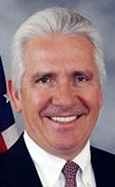
Rep. Jim Costa, D-Calif.
Rep. Jim Costa, D-Calif., whose district includes many dairy farmers, told reporters today that continuing the Milk Income Loss Contract program is not a good option because the MILC program “doesn’t work for 60 to 70 percent” of the dairy industry. Costa said he believes the way to win Boehner’s support is to convince him that without the market stabilization/supply management program the program's costs could be unacceptable.
Costa also said he expects Lucas to inform conferees later tonight whether there will be a conference on Thursday. But he also said he expects the farm bill to come to the Senate floor before the House floor.
On the core nutrition and commodity titles, Lucas said he would not go so far as to say they have been completely resolved. He said he expects to hold votes on a number of issues in the public conference, but declined to name them.
Meanwhile, the issue of whether farm bill savings will be used as an offset to extend unemployment benefits remains unresolved.
The Senate invoked cloture to hold a vote on the extension, but Republicans want to be able to amend that bill. Democrats say that no other program should be cut to pay for the benefits, but House Republicans want an offset. Democrats say that if the Republicans want an offset they should propose it. Several offsets including farm bill savings have been mentioned.
Rep. Frank Lucas, R-Okla.
Lucas, who is chairing the farm bill conference, told reporters at about 4 p.m. that it was too early in the day to say whether there would be a conference on Thursday.
“I want it so bad you can’t imagine,” Lucas said as he walked down a Capitol hallway after a vote on the House floor.
Lucas’s talk while walking with reporters followed a non-encounter this morning when he, House Agriculture Committee ranking member Collin Peterson, D-Minn., and Senate Agriculture ranking member Thad Cochran, R-Miss., met with Senate Agriculture Committee Chairman Debbie Stabenow, D-Mich., in her personal office and avoided reporters by leaving through a back door to Stabenow’s office.
Stabenow did not meet with journalists but told one reporter that she and her colleagues are “very close” to final agreement. Aides to the principal negotiators told reporters that rooms have been booked for the conference in case they are needed.
As has so often been the case with past farm bills, dairy has emerged as the last major issue to be resolved. For decades congressional farm leaders have said dairy policy is difficult because milk is produced in all 50 states and it is hard to come with a policy that works in all climate zones.
But this year the conflict is between the producers and the processors rather than among the producers.
Rep. Collin Peterson, D-Minn.
Peterson said repeatedly in December that the dairy issue was resolved. He did not reveal details, but seemed pleased by the resolution.
That signaled that the four principal negotiators had agreed on a program that would please dairy producers organized by the National Milk Producers Federation. That program is based on insurance to protect the farmers when production costs rise more than dairy prices but it includes a provision to discourage dairy farmers from increasing production when prices are low.
Dairy processors organized by the International Dairy Foods Association have objected to that provision, saying it could result in high prices and supply shortages that would make it difficult to be considered reliable suppliers for foreign customers.
The Senate farm bill includes the bill that Peterson and National Milk developed. The House Agriculture Committee also approved the House bill, but on the House floor members voted to eliminate what the dairy farmers call market stabilization and the processors call supply management.
House Speaker John Boehner, R-Ohio, led the opposition to the supply management provision, and last Friday he told Peterson and Lucas in a telephone call that he still objected to it, according to a report in Politico on Tuesday.
A Boehner spokesman told The Hagstrom Report today that there had been no movement on dairy since last Friday. Lucas said there had been “lots of discussion” but no resolution.
Peterson and National Milk maintain they do not want the version of the dairy title approved on the House floor enacted into law because leaving out the provision to discourage overproduction could lead to higher taxpayer costs, which, in turn, would lead to a public revolt against the program.
Peterson has said he is willing to make changes but that there must be a dairy program that works, Politico reported.
“If you’re between your ranking member and your speaker, that’s a tough position to be in a conference committee,” Lucas told Bloomberg.
Rep. Jim Costa, D-Calif.
Rep. Jim Costa, D-Calif., whose district includes many dairy farmers, told reporters today that continuing the Milk Income Loss Contract program is not a good option because the MILC program “doesn’t work for 60 to 70 percent” of the dairy industry. Costa said he believes the way to win Boehner’s support is to convince him that without the market stabilization/supply management program the program's costs could be unacceptable.
Costa also said he expects Lucas to inform conferees later tonight whether there will be a conference on Thursday. But he also said he expects the farm bill to come to the Senate floor before the House floor.
On the core nutrition and commodity titles, Lucas said he would not go so far as to say they have been completely resolved. He said he expects to hold votes on a number of issues in the public conference, but declined to name them.
Meanwhile, the issue of whether farm bill savings will be used as an offset to extend unemployment benefits remains unresolved.
The Senate invoked cloture to hold a vote on the extension, but Republicans want to be able to amend that bill. Democrats say that no other program should be cut to pay for the benefits, but House Republicans want an offset. Democrats say that if the Republicans want an offset they should propose it. Several offsets including farm bill savings have been mentioned.
