Chefs urge Congress to pass farm bill with help for SNAP participants to buy fruits, vegetables
April 24, 2013 | 04:30 PM
 Agriculture Secretary Tom Vilsack spoke Sunday to Wholesome Wave at the Georgetown home of Gus Schumacher (left). At right is founder and CEO Michel Nischan. (Eddie Gehman Kohan/Obama Foodorama)
A coalition of chefs and local food advocates under the banner of Wholesome Wave traveled to Capitol Hill on Tuesday to urge Congress to pass a farm bill with a provision to help make the cost of fruits and vegetables from farmers’ markets cheaper for food stamp recipients.
The food stamp program is now formally titled the Supplemental Nutrition Assistance Program, better known as SNAP.
The chefs and local food advocates urged passage of the farm bill this year this year at the direction of Agriculture Secretary Tom Vilsack, who spoke to the group Sunday at a reception at the Georgetown home of Gus Schumacher, a Wholesome Wave senior vice president who served as Agriculture undersecretary for farm and foreign agricultural services in the Clinton administration.
If Congress does not pass a new farm bill this year and extends the 2008 bill again, as it has for this fiscal year, it will extend the big current farm programs but probably not provide funding for new innovative programs such as assistance to farmers’ markets or to the specialty crops that nutritionists say are beneficial to health, Vilsack told the group.
The secretary praised Wholesome Wave for its efforts to connect low-income consumers with food from farmers’ markets.
Vilsack said he found it “sad” to learn on a trip to San Diego last week to find that many military families think fruits and vegetables are too expensive to buy.
He cited a USDA Economic Research Service study that showed previous studies have led people to believe that fruits and vegetables are expensive because they have compared the cost of those items to other foods based on the number of calories in each, but that it is more appropriate to compare portions of food.
At a news conference on Tuesday, Michel Nischan, the owner of the Dressing Room restaurant in Westport, Conn., and the founder of Wholesome Wave, explained that the group has raised $8.5 million in private money over the past five years to provide “double bucks” coupons to SNAP participants to encourage them to buy fruits and vegetables from farmers’ markets.
The group has worked with more than 300 farmers’ markets in 27 states and had tremendous success in encouraging the SNAP participants to visit the markets and buy fruits and vegetables. Wholesome Wave also operates an experimental “prescription veggie” program under which doctors “prescribe” fruits and vegetables rather than drugs to counter obesity and other nutrition-related health problems.
Now the group wants to expand the program. The farm bill that the Senate passed last year included $20 million per year for a double bucks program that would require local matching while the bill that the House Agriculture Committee passed included $5 million per year to achieve the same goal. The chefs and activists urged members of Congress to include the program in the farm bill again this year.

“Calories are cheap. Nutrition is expensive,” Tom Colicchio, the Top Chef judge, said at the new conference. “We have to figure out a way to make nutrition less expensive. It is bad to demonize the parents as if they had a choice in the decision.”
In the 306 farmers’ markets that participate in the Wholesome Wave program, 27 percent of sales come from federal benefits and double bucks, Nishan said. More than 3,200 farmers have benefited from the sales, according to a Wholesome Wave news release.

Sarah Smith, a farmer and farmers’ market manager from Skowhegan, Me., said that SNAP-related sales at her market have jumped from $3,500 the first year to $25,000 in the last year.
“It is making a major impact on small businesses,” Smith said. And the SNAP customers, she added, “say they feel better, have more energy ad are going for walks with their kids because they feel better. They also feel empowered and feel a sense of community.”

Nischan said the group also urged Congress to continue funding for SNAP as an economic development tool. Nischan also said he reminds conservatives who want to cut SNAP spending that President George W. Bush sanctioned the change in the name of the program from food stamps to SNAP to get rid of the social stigma and also ordered a study that showed the importance of SNAP to the economy.
“Just like crop insurance insures farmers when weather goes bad, this is customer insurance,” Nischan said. But he added that members of Congress from Florida, for example, should realize much of the SNAP money is spent on foods grown and processed outside the state rather than the fruits and vegetables grown in the state.
The chefs said they got involved in Wholesome Wave because they wanted to have an impact beyond their restaurants that cater to elites who can order expensive food.
“Chefs love feeding all people, but in our business models we don’t get to do that,” Nischan said.
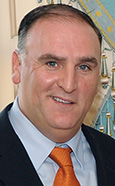
“As a chef we feed the few, but we want to make sure we are part of the conversation about how we are going to feed the many,” said José Andrés, the owner of several Washington restaurants.
Will Allen, the head of Growing Power, Inc., a Milwaukee group that encourages urban agriculture, said at the news conference that Wholesome Wave’s activities are “revolutionary” in terms of getting food into low-income communities, particularly people of color, and also helping farmers.
