FDA provides more comment time on Food Safety Modernization Act produce rule
April 18, 2013 | 06:20 PM

The Food and Drug Administration will extend the comment period for the Food Safety Modernization Act proposed rule on produce by 120 days beyond the current May 16 deadline, FDA Commissioner Margaret Hamburg said today.
Industry groups representing large and small producers have asked for an extension of the rule, which is officially known as the “FSMA Proposed Rule for Produce: Standards for the Growing, Harvesting, Packing and Holding of Produce for Human Consumption.”
“I think it is a reasonable request,” Hamburg said in her annual testimony to the Senate Agriculture Appropriations Subcommittee.

During the hearing, Sen. Mark Pryor, D-Ark., the chairman of the subcommittee, said he was concerned that the FDA’s proposal for user fees to enforce the rule raises questions about whether it will be enforced properly because there is so much opposition to the fees.
On Monday, at the Consumer Federation of America National Food Policy Conference, Pryor said that he had not taken a position on food-user fees, but today he noted that only authorizing committees could pass legislation to establish such fees.
Hamburg also testified that under sequestration the FDA’s ability to use fees from pharmaceutical companies to test drugs has been restricted.
Pryor noted that most people don’t think that sequestration affected drug user fees, and that that restriction makes food user fees even more questionable.
Hamburg said, however, that she has “begun discussions with industry in this arena” and that the move toward “a preventive model” of food safety under FSMA is “shared” with industry.
She added, however, that government spending on FDA “is a smart investment and a bargain in fact,” noting that the agency regulates products that make up 20 cents of every consumer dollar spent, but the cost to individual Americans is only $8 per year.
At the Consumer Federation conference, Pryor said, “I don't know all the answers” on FDA funding.
“You will see more pressure on the government to get more revenue and one of the ways will be fees,” he said. There will be opposition to the fees, he noted, but at the same time, there will be pressure to fulfill the act’s mandate.
During the hearing, Hamburg also said that the agency will complete the chain restaurant menu labeling program required under the Affordable Care Act this calendar year.

Sen. Jon Tester, D-Mont., urged Hamburg to make sure that small producers do not bear undue burdens under FSMA.
“We do not want one-size-fits-all,” Hamburg said, adding that growing produce varies depending on the size of the farm operation and who it is sold to.
Tester also noted that FDA has before it a petition with more than 1 million signatures asking for a re-examination of genetic modification of crops.
“The amount of testing on GMO food is slim to none, and slim just left town,” Tester said.
Hamburg said that FDA supports voluntary labeling, but Tester said he is “not certain it will ever happen.”
Sen. Roy Blunt, R-Mo., the subcommittee ranking member, asked Hamburg whether science shows that GMO food is safe.
“We do not believe there are existing threats to health from these products,” Hamburg replied.
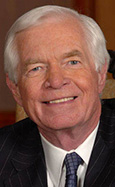
Sen. Thad Cochran, R-Miss., told Hamburg that catfish producers in his state are worried that labeling requirements are not applied to foreign fish.
Hamburg noted that catfish regulation is “particularly complex,” especially since the 2008 farm bill called for the Agriculture Department to take it over.
“That process is still in transition,” Hamburg said. “Until USDA takes it over we are continuing to provide oversight.”
“Your personal oversight of that would be appreciated,” Cochran replied.
