G20 leaders learn of drop in food price index
November 04, 2011 | 12:05 AM | Filed in: Agricultural development Food security
By JERRY HAGSTROM
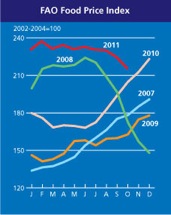 CANNES, France — The U.N. Food and Agriculture Organization said Thursday that its food price index had dropped to an 11-month low in October, an announcement that was good news for people in developing countries in the short run, but also reduced the pressure on leaders attending the G20 meeting here to take much action on long-term agricultural development.
French President Nicolas Sarkozy had pushed an agriculture development agenda, but leaders have been so preoccupied here with the eurozone crisis that agriculture and other issues have gotten little attention.
The FAO said the price index had declined 4 percent, or 9 points, to 216 points from September.
Nonetheless, prices still remain generally higher than last year and very volatile, FAO said. The drop was triggered by sharp declines in international prices of cereals, oils, sugar and dairy products, but meat prices declined the least, and overall prices were still some 5 percent above the corresponding period last year, the U.N. agency said.
The World Trade Organization also announced today it has established a food security page on its website.
The page includes the first Agriculture Market Information System (AMIS) report, which the WTO noted was released in time for the G20 summit. See link below.
AMIS, which was established at the G20 ag ministers’ summit in Paris in June and is supposed to provide a better warning system on possible food crises, is run by nine international organizations, including the WTO, and hosted by the FAO.
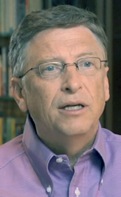 Bill Gates, The Bill & Melinda Gates Foundation
Despite being distracted by the eurozone crisis, the G20 heads of government did listen to Microsoft founder and philanthropist Bill Gates present his report on development financing.
Gates urged the developed countries not to stop spending money on Third World development, and offered some innovations and nuances on how this might proceed. Although the Bill & Melinda Gates Foundation has made agriculture development in sub-Saharan Africa and South Asia a priority, Gates talked as much about the need for improved health and medical care as about agriculture.
“If the countries that have made promises stick to them, it will generate an additional $80 billion annually starting in 2015,” Gates said, according to a news release. “Well-designed aid reduces poverty right now and accelerates poor countries’ progress toward the moment when they no longer need it.”
Beyond rich countries’ responsibility, Gates said rapidly emerging economies such as China and Brazil, which have recent experiences in reducing poverty and enormous technical capacity, bring unique insights and skills to create breakthrough tools for development.
Noting that the Gates Foundation has reached agreements with Brazil to help development in Africa and China to support development of new health products, Gates said “I am particularly excited about the possibility of ‘triangular partnerships’ among rapidly growing countries, traditional donors, and poor countries, because they exploit the comparative advantages of many different countries."
Gates also proposed several ways of raising more money for development, including better tax revenue collection in developing countries, directing a percentage of funds from a financial transaction tax, a “solidarity tobacco contribution,” and an aviation and bunker fuel tax, to fund development and programs on climate change.
Non-governmental groups had been hoping Gates would come out strongly for the G20 member countries to establish taxes on financial transactions if they do not have them. But Gates said only, “The G20 countries will continue discussing the FTT. For those that choose to adopt it, I urge you not to use all of the proceeds as general revenue. It is critical that a portion of the money raised be reserved for investments in development.”
That statement disappointed some NGO leaders, but Sam Worthington, president and CEO of InterAction, a U.S. group, said that Gates “had reached out to NGOs” before writing the report and noted that the FTT was only one of several ways to come up with more money for development.
Worthington acknowledged that Gates’s statement on the FTT in the report was not as strong as his recent statements to the press on the subject, but added that InterAction supports a variety of ways to raise money.
French President Nicolas Sarkozy had pushed an agriculture development agenda, but leaders have been so preoccupied here with the eurozone crisis that agriculture and other issues have gotten little attention.
The FAO said the price index had declined 4 percent, or 9 points, to 216 points from September.
Nonetheless, prices still remain generally higher than last year and very volatile, FAO said. The drop was triggered by sharp declines in international prices of cereals, oils, sugar and dairy products, but meat prices declined the least, and overall prices were still some 5 percent above the corresponding period last year, the U.N. agency said.
WTO launches food security page online
The World Trade Organization also announced today it has established a food security page on its website.
The page includes the first Agriculture Market Information System (AMIS) report, which the WTO noted was released in time for the G20 summit. See link below.
AMIS, which was established at the G20 ag ministers’ summit in Paris in June and is supposed to provide a better warning system on possible food crises, is run by nine international organizations, including the WTO, and hosted by the FAO.
Gates issues report on financing Third World development
Despite being distracted by the eurozone crisis, the G20 heads of government did listen to Microsoft founder and philanthropist Bill Gates present his report on development financing.
Gates urged the developed countries not to stop spending money on Third World development, and offered some innovations and nuances on how this might proceed. Although the Bill & Melinda Gates Foundation has made agriculture development in sub-Saharan Africa and South Asia a priority, Gates talked as much about the need for improved health and medical care as about agriculture.
“If the countries that have made promises stick to them, it will generate an additional $80 billion annually starting in 2015,” Gates said, according to a news release. “Well-designed aid reduces poverty right now and accelerates poor countries’ progress toward the moment when they no longer need it.”
Beyond rich countries’ responsibility, Gates said rapidly emerging economies such as China and Brazil, which have recent experiences in reducing poverty and enormous technical capacity, bring unique insights and skills to create breakthrough tools for development.
Noting that the Gates Foundation has reached agreements with Brazil to help development in Africa and China to support development of new health products, Gates said “I am particularly excited about the possibility of ‘triangular partnerships’ among rapidly growing countries, traditional donors, and poor countries, because they exploit the comparative advantages of many different countries."
Gates also proposed several ways of raising more money for development, including better tax revenue collection in developing countries, directing a percentage of funds from a financial transaction tax, a “solidarity tobacco contribution,” and an aviation and bunker fuel tax, to fund development and programs on climate change.
Non-governmental groups had been hoping Gates would come out strongly for the G20 member countries to establish taxes on financial transactions if they do not have them. But Gates said only, “The G20 countries will continue discussing the FTT. For those that choose to adopt it, I urge you not to use all of the proceeds as general revenue. It is critical that a portion of the money raised be reserved for investments in development.”
That statement disappointed some NGO leaders, but Sam Worthington, president and CEO of InterAction, a U.S. group, said that Gates “had reached out to NGOs” before writing the report and noted that the FTT was only one of several ways to come up with more money for development.
Worthington acknowledged that Gates’s statement on the FTT in the report was not as strong as his recent statements to the press on the subject, but added that InterAction supports a variety of ways to raise money.
